
To be honest: when you're in your late twenties, like me, your pension probably isn't at the top of your priority list. We are busy with careers, perhaps buying a house, travelling, or just enjoying the weekend. "We'll deal with that later" is often the thought. But if I’ve learned one thing through my work for Jobsking, it’s that ‘later’ arrives sooner than you think.
And the good news? Precisely because we are still young, we can make a huge difference with relatively small amounts. But even if you're reading this blog and have already passed forty or fifty: the best day to start was yesterday, the second best day is today.
In this article, we’ll dive deep into the details. How do you arrange this properly without it becoming boring or complicated?
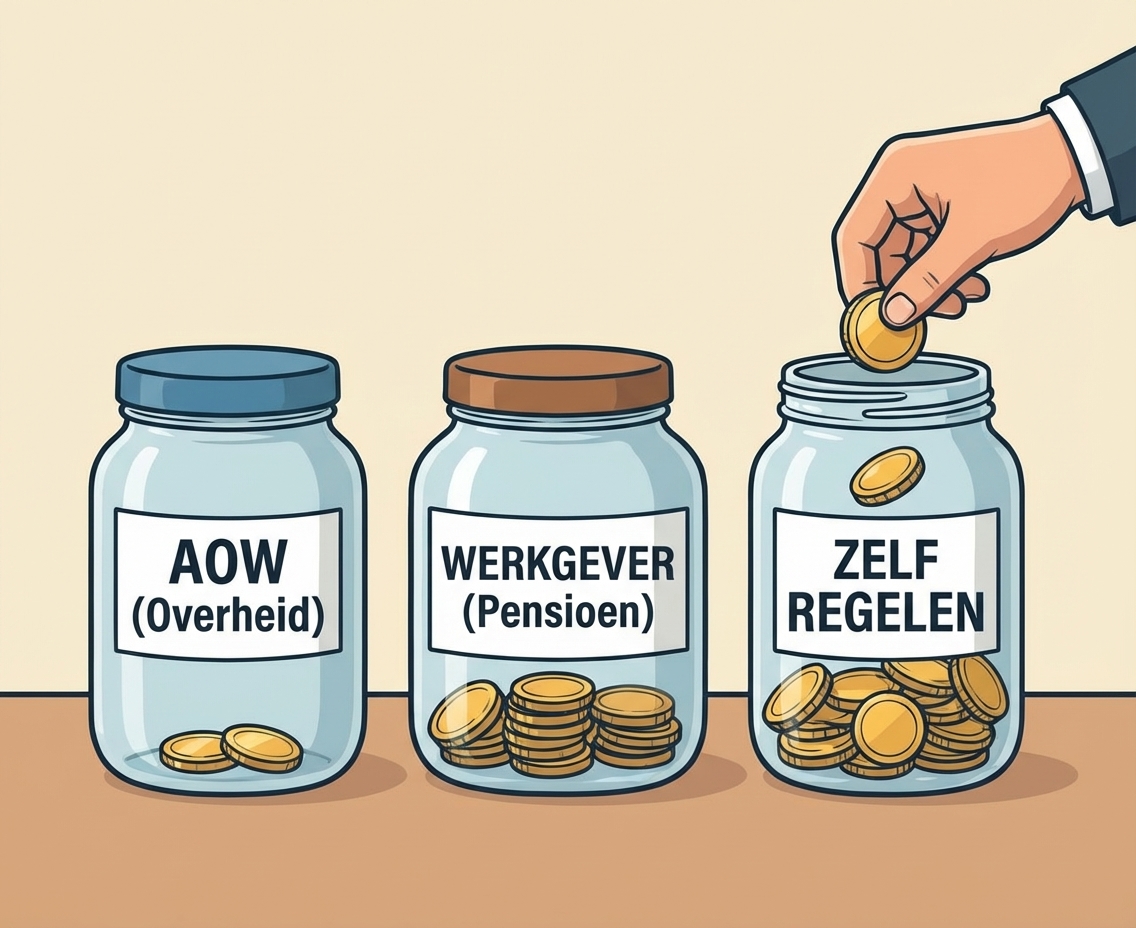
The hard figures (swallowing the bitter pill) In the Netherlands, we have a pretty well-organised pension system, but it is no longer as straightforward as it was for our parents. Your pension usually consists of three pots:
-
The AOW (state pension from the government).
-
Pension through your employer (if you are an employee).
-
What you arrange yourself.
Gaps are increasingly appearing, especially in that second pot. Perhaps you worked as a freelancer for a few years, worked part-time for a while, or your employer has a meager scheme. If you stop working later on, there's a significant chance your income will plummet. Do you still want to take those far-off trips or simply be able to keep going out for dinner? Then you have to get to work yourself.
How can you fix this? Fortunately, there are countless ways to bridge that gap. You can put your money into a regular savings account, but with inflation and wealth tax (Box 3), that often doesn't get you very far. Your savings actually lose value every year.
It is much smarter to make use of tax advantages. The government actually encourages us to provide for our future. This is called 'annual margin' (jaarruimte). This is an amount you are allowed to set aside for your pension every year, which you can deduct from your income tax. So, you don't pay tax on it now; only when you have it paid out later (and by then you often fall into a lower tax bracket).
You can very easily build up a pension yourself. This can be done through 'bank savings' or by investing in a special pension product. Because you lock this money away until your retirement age, the tax authorities are kinder to your wallet.
Saving or investing? This is the question I get asked most often. Do you go for security or for returns?
-
Bank savings: This is safe. You receive interest and you have a fairly good idea of where you stand.
-
Pension investing: If you are still young (like us!), this is often more interesting. Historically, investing yields far more than saving in the long term. Yes, the stock market goes up and down, but because you won't need the money for another 30 or 40 years, you have plenty of time to absorb those dips.
One of the most solid options in the market is Nationale-Nederlanden (NN). They have been a household name in the Netherlands for years and offer very clear products for pension savings or investing. What I personally like about NN is that they are transparent about costs and returns. You know exactly where you stand, without small print that you only discover in thirty years' time.
Frequently asked questions about pensions When you look into this, you run into many questions. Below, I answer the most important ones so you don't have to figure it all out yourself.
1. How much am I actually allowed to deposit tax-free? That depends on your ‘annual margin’ (jaarruimte). Simply put, that is the pension deficit you built up in a specific year. Did you build up little pension through an employer last year, or are you a freelancer (zzp’er)? Then your annual margin is larger. You can calculate this exactly via the website of the Tax Authorities (Belastingdienst) or, even easier, via the calculation tool on the NN site. It’s a waste not to use this, because it is literally a tax benefit you're leaving on the table.
2. I am 50+ and haven't done anything extra yet. Is it too late? Absolutely not! In fact, you are likely dealing with ‘unused contribution room’ (reserveringsruimte). This is the unused pension growth (annual margin) from the past ten years. This means you can now make a significant tax-efficient lump-sum contribution to catch up. You can read more about exactly how this works on the government page about unused contribution room. While the compounding effect might be less significant than if you had started at 25, every bit of extra income for later is a direct win for your future standard of living.
3. Why should I choose a special pension account instead of just investing in shares myself? The main difference is in the taxes. With a ‘regular’ investment account, you pay wealth tax in Box 3 if you exceed the tax-free threshold. With an official pension account (annuity), that money does not count towards your assets in Box 3. Furthermore, your social contributions are deductible in Box 1. In the end, this saves you a huge amount of money. The downside is that the money is locked away; you cannot simply use it to buy a new car. However, that’s actually a benefit, as it ensures the money will still be there when you stop working.
4. Can I access my money in the meantime if I really need it? In principle, you lock the money away until your retirement age. That is the "deal" you make with the government in exchange for that tax advantage. Should you find yourself in an absolute emergency, you can surrender the policy, but be warned: you will then have to pay tax as well as a penalty interest (revision interest). It is therefore truly intended as a pot for later, not for a home renovation next year.
5. What happens to my accumulated pot if I pass away? This is a very valid concern. With an ‘old-fashioned’ pension fund, you sometimes lose your contributions if you die before the retirement date. With pension savings or investments via a provider like NN, this is not the case. Upon your death, the balance in your account simply goes to your survivors (your heirs). They are then required to purchase a survivor's annuity with it, but the money does not just evaporate. That’s a reassuring thought for your partner or children.
Conclusion: just get started Whether you choose the safety of savings or the potential returns of investing: doing nothing is no longer an option. Check Mijnpensioenoverzicht.nl to see your current status. Shocked by the amount? Don't panic, but do take action.
My tip? Have a look at the NN website. They make it incredibly accessible to get started, even if you aren't a financial expert. Your future self – hopefully sitting in the sun somewhere with a cocktail – will thank you.